A Radiology Information System (RIS) is the backbone of every modern radiology department. It manages everything from patient scheduling and exam tracking to report generation and billing — yet most hospital administrators don't fully understand what RIS does or how it differs from PACS. This guide explains it all.
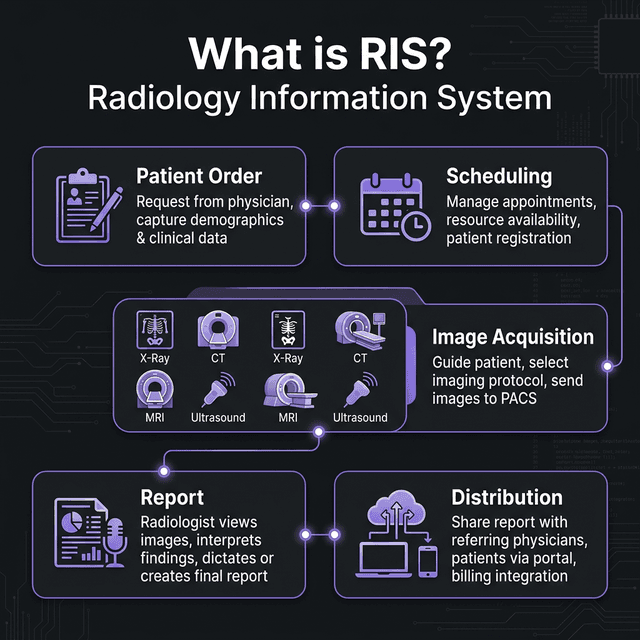
What is RIS (Radiology Information System)?
RIS stands for Radiology Information System. It is specialized software designed to manage the entire workflow of a radiology department — from the moment a doctor orders an imaging study to the final report delivery and billing.
RIS automates 80% of radiology department workflows.
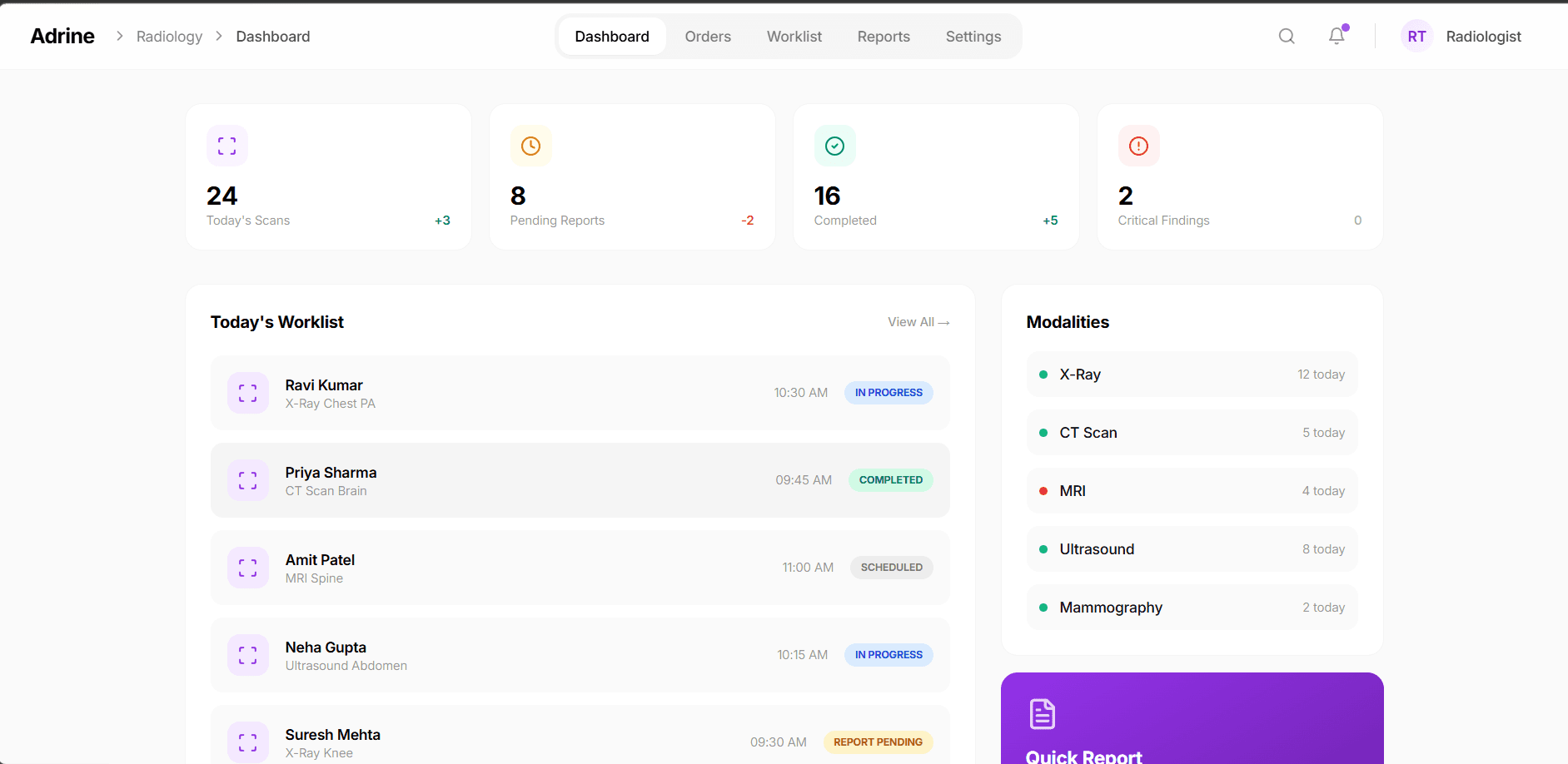
Digital RIS reduces patient wait time for reports by 70%.
Think of RIS as the "operating system" for your radiology department. While PACS (Picture Archiving and Communication System) handles medical images, RIS handles everything else — the scheduling, tracking, reporting, and business side of radiology.
Scheduling
Patient & modality scheduling
Tracking
Real-time exam status tracking
Reporting
Structured radiology reports
Integration
PACS, HMS, ABDM connected
RIS vs PACS: What's the Difference?
This is the most common confusion in radiology IT. Here's a clear breakdown:
| Feature | RIS | PACS |
|---|---|---|
| Purpose | Workflow management | Image storage & viewing |
| Handles | Scheduling, reports, billing | X-ray, CT, MRI images |
| Data Type | Text data (orders, reports) | DICOM images |
| Users | Technicians, front desk, admin | Radiologists, referring doctors |
| Integration | HMS, billing, lab | Modalities (CT, MRI, X-ray) |
| Protocol | HL7/FHIR | DICOM |
Key insight: RIS and PACS are complementary. RIS is the "brain" (managing operations), PACS is the "archive" (storing images). Modern solutions like Adrine integrate both in one platform.
RIS Workflow: How It Works Step-by-Step
Step 1: Order Entry
The referring doctor places an imaging order (e.g., "Chest X-ray PA view") through the HMS. This order flows into the RIS automatically.
Step 2: Patient Scheduling
RIS schedules the patient based on modality availability, urgency level, and patient preferences. It sends appointment confirmations via SMS.
Step 3: Patient Check-in
When the patient arrives, the RIS updates their status. Technicians can see the worklist — which patients are waiting and what exams are ordered.
Step 4: Exam Execution
RIS sends the exam details to the modality (CT scanner, X-ray machine) via DICOM Modality Worklist (MWL). This eliminates manual data entry at the machine.
Step 5: Image Acquisition
Images captured by the modality are automatically sent to PACS for storage and linked to the patient's record in RIS.
Step 6: Reporting
The radiologist reviews images on PACS and creates a structured report in RIS. Modern RIS supports voice dictation, templates, and AI-assisted reporting.
Step 7: Report Distribution
The completed report is automatically sent to the referring doctor via HMS, available in the patient portal, and stored in the ABDM health record.
Step 8: Billing
RIS automatically generates billing based on the procedures performed, applying GST rules and insurance/TPA rates.
Key Features of a Modern RIS
- Smart Scheduling: Resource-based scheduling considering room, equipment, and staff availability
- DICOM MWL: Automatic worklist pushing to modalities — no manual entry
- Structured Reporting: Templates, voice dictation, and AI suggestions for consistent reports
- Critical Result Alerts: Instant notifications for abnormal findings
- PACS Integration: Seamless image viewing within the reporting workflow
- Analytics Dashboard: TAT (Turn-Around Time), modality utilization, radiologist productivity
- ABDM Integration: Health records shared via ABDM consent framework
- Teleradiology: Remote reporting for after-hours and specialist opinions
- AI Integration: AI-powered image prioritization and anomaly detection
- GST Billing: Compliant invoicing with TPA/insurance integration
Benefits of RIS for Indian Hospitals
- 50% Faster TAT: Automated workflow reduces report turnaround from hours to minutes
- Zero Manual Entry: DICOM MWL eliminates data entry errors at modalities
- 30% Higher Throughput: Smart scheduling maximizes modality utilization
- NABH Compliance: Automated documentation meets NABH radiology standards
- Revenue Tracking: No missed billing — every exam is automatically charged
- ABDM Ready: Health records shared nationally via ABHA framework
How to Choose the Right RIS
When evaluating RIS for your hospital, check these criteria:
- HMS Integration: Does it integrate with your existing hospital software?
- PACS Compatibility: Does it support standard DICOM protocols?
- Cloud vs On-Premise: Cloud offers remote access; on-premise offers local control
- AI Features: Does it support AI-powered reporting and image analysis?
- ABDM Compliance: Can it share records via ABDM framework?
- Scalability: Will it handle your growth from 50 to 500 exams/day?
- Support: Does the vendor provide 24/7 support and training?
Frequently Asked Questions
What is RIS used for?
RIS manages the complete radiology workflow — patient scheduling, exam tracking, report generation, result distribution, and billing. It connects all players: referring doctors, technicians, radiologists, and billing staff.
Do small hospitals need RIS?
Yes. Even hospitals with 1-2 modalities benefit from RIS. It eliminates manual tracking, reduces billing errors, and provides analytics. Cloud-based RIS solutions like Adrine start at ₹5,000/month, making them affordable for small setups.
Can RIS work without PACS?
Yes, but you lose the biggest benefit — seamless image-to-report workflow. RIS manages scheduling and reports without PACS, but radiologists won't have integrated image viewing. Most modern solutions include both RIS and PACS functionality.
Related Articles
- LIS Software Guide 2026: Best Laboratory Information Systems for Indian Labs
- 15 Standard Modules in Hospital Management System (2026 Complete List)
- ABDM FHIR Integration Guide 2026: Making Your HMS Compliant
- Hospital Billing Software with GST 2026: Complete Guide
See Adrine's Integrated RIS in Action
Adrine combines RIS + PACS + HMS in one platform. Schedule, report, and bill — all from one screen.
Book Free Demo