NABH has released its 6th edition standards, bringing the most significant overhaul in nearly a decade. With stronger emphasis on digital health, antimicrobial stewardship, and patient safety — hospitals must adapt. Here are the 10 key changes and how to prepare.
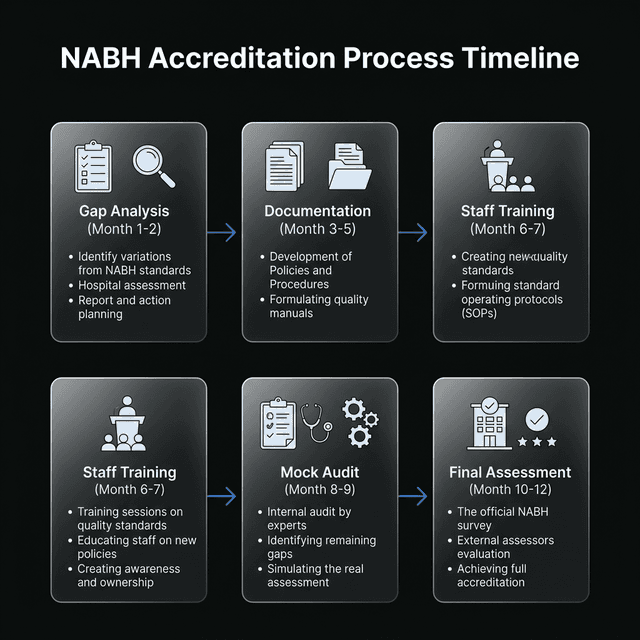
NABH 6th Edition: Overview
The 6th edition of NABH standards was released in January 2025 and is now effective for all new accreditation applications. The Entry Level 2nd edition became effective from January 1, 2026. Key highlights:
NABH 6th edition introduces 15 new quality indicators.
Digital documentation compliance increased by 40% in 6th edition.
- Stronger emphasis on digital health integration
- New requirements for antimicrobial stewardship
- Enhanced patient safety goals
- Updated infection control standards (post-COVID learnings)
- Greater focus on patient-centered care
- Streamlined documentation with focus on outcomes over processes
10 Key Changes in NABH 6th Edition
Change 1: Mandatory Digital Health Records
The 6th edition strongly recommends hospitals to maintain Electronic Medical Records (EMR) and integrate with India's ABDM (Ayushman Bharat Digital Mission) framework. While not absolute mandatory, hospitals using digital records will score significantly higher in assessments.
What you need:
- HMS with EMR functionality
- ABDM/ABHA integration capability
- Digital consent management system
- Health record sharing via FHIR standards
Change 2: Enhanced Antimicrobial Stewardship
Antimicrobial resistance (AMR) is a major concern in India. The 6th edition introduces dedicated standards for antimicrobial stewardship programs with specific requirements:
- Antimicrobial stewardship committee formation
- Antibiogram preparation and review
- Restricted antibiotic authorization protocols
- Culture sensitivity testing before prescribing
- Audit of antibiotic usage patterns
Change 3: Strengthened Patient Safety Goals
The International Patient Safety Goals (IPSG) have been updated with more measurable indicators:
- Patient identification: Two-identifier policy (name + UHID/DOB)
- Medication safety: High-alert medication protocols, LASA drug management
- Surgical safety: WHO checklist compliance with evidence of all 3 phases
- Fall prevention: Risk assessment scoring for all admitted patients
- Infection prevention: Hand hygiene compliance monitoring (target: 80%+)
Change 4: Updated Infection Control Standards
Post-COVID learnings have been incorporated into infection control:
- Airborne infection isolation room requirements
- Enhanced PPE protocols with documented training
- Pandemic preparedness plans
- Environmental monitoring including air quality
- Updated biomedical waste management SOPs
Change 5: New Quality Indicator Requirements
The 6th edition mandates tracking and benchmarking of quality indicators across departments:
- Hospital-wide indicators: mortality rate, readmission rate, patient falls
- Department-specific indicators: surgical site infection rate, ventilator-associated pneumonia, CLABSI
- Patient satisfaction scores with standardized survey tools
- Quarterly analysis and trend reporting
Change 6: Environment & Facility Management Updates
New requirements for facility management include:
- Fire safety drills with documented frequency
- Medical gas system safety protocols
- Utility failure management plans
- Green hospital initiatives
- Hazardous material management
Change 7: Strengthened Patient Rights
Enhanced focus on patient-centered care:
- Informed consent process improvements
- Patient grievance redressal within defined timelines
- Privacy and dignity during treatment
- Right to information about costs
- End-of-life care policies
Change 8: Enhanced Critical Area Guidelines
ICU, OT, and Emergency departments have stricter standards:
- ICU admission and discharge criteria based on scoring systems
- OT time-out protocol with documented compliance
- Emergency triage protocols with defined response times
- Critical value reporting and escalation policies
- Sedation safety protocols
Change 9: Mandatory Staff Wellness Programs
For the first time, NABH addresses healthcare worker wellness:
- Staff health screening programs
- Mental health and de-stress initiatives
- Needle-stick injury prevention and management
- Safe working hours policies
- Workplace violence prevention
Change 10: Continuous Quality Improvement
The 6th edition shifts from "compliance mindset" to "improvement mindset":
- PDCA (Plan-Do-Check-Act) cycle documentation for quality projects
- Root Cause Analysis (RCA) for sentinel events
- Evidence-based clinical pathways
- Clinical audit program with documented outcomes
- Benchmarking with national standards
How to Prepare for NABH 6th Edition
| Area | Action Required | Timeline |
|---|---|---|
| Digital Health | Implement HMS with EMR + ABDM integration | Immediate |
| Antimicrobial | Form AMS committee, create antibiogram | 1-2 months |
| Patient Safety | Update IPSG protocols, train all staff | 1-3 months |
| Infection Control | Update SOPs, add pandemic preparedness | 2-3 months |
| Quality Indicators | Set up tracking dashboards, baseline data | 1-2 months |
| Documentation | Revise all SOPs to 6th edition format | 3-6 months |
5th Edition vs 6th Edition: Quick Comparison
| Parameter | 5th Edition | 6th Edition |
|---|---|---|
| Digital Health | Optional | Strongly recommended |
| ABDM Integration | Not mentioned | Included in standards |
| Antimicrobial Stewardship | Basic mention | Dedicated standards |
| Patient Safety | 6 IPSGs | Enhanced IPSGs with metrics |
| Staff Wellness | Minimal | Mandatory programs |
| Quality Focus | Process compliance | Outcome-based improvement |
| Pandemic Prep | Not included | Mandatory plans |
Frequently Asked Questions
When does NABH 6th edition become mandatory?
It's already effective for all new applications. Existing accredited hospitals will transition at their next renewal. Start preparing now — don't wait until your assessment date.
Do I need to start from scratch?
No. If you're already accredited under 5th edition, most of your documentation carries forward. Focus on the 10 key changes listed above, particularly digital health integration and antimicrobial stewardship.
Can software help with 6th edition compliance?
Absolutely. HMS software like Adrine with built-in NABH compliance automates quality indicator tracking, generates audit-ready reports, and ensures documentation meets 6th edition standards — saving months of manual preparation.
Related Articles
- NABH Audit Checklist 2026: 200+ Documents Your Hospital Needs
- NABH Entry Level Incentive 2026: Fees + Process
- ABDM FHIR Integration Guide 2026
- 15 Standard Modules in Hospital Management System
NABH 6th Edition Ready with Adrine
Adrine's NABH module is updated for 6th edition standards. Auto-generated SOPs, quality dashboards, and ABDM integration included.
Book Free Demo