How HMS Improves Patient Care in Indian Hospitals: Evidence-Based Analysis
Hospital Management Software (HMS) is often viewed as an administrative tool for billing and registration. But its true impact goes far beyond paperwork—it directly improves patient care, reduces medical errors, and saves lives. Here's an evidence-based analysis of how HMS transforms patient outcomes in Indian hospitals.
The Patient Care Crisis in Indian Hospitals
Before we discuss solutions, let's understand the challenges:
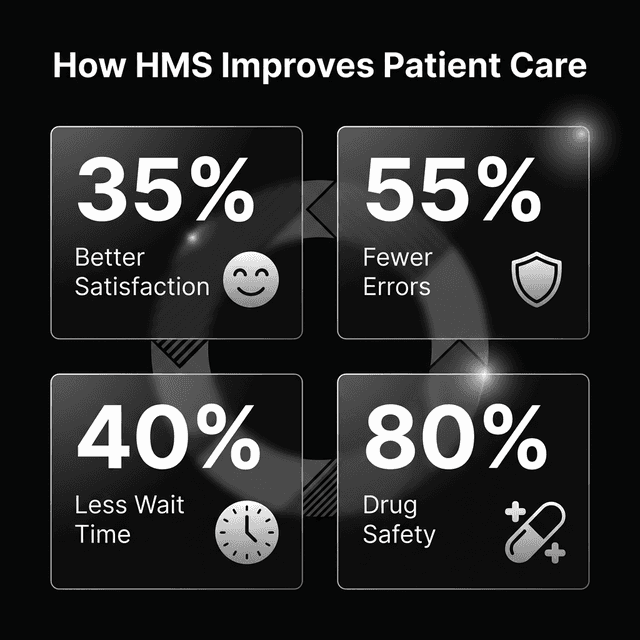
Hospitals with digital HMS report 35% improvement in patient satisfaction.
EMR adoption reduces medical errors by 55%.
Automated alerts prevent 80% of drug interaction incidents.
- 1.7 million annual deaths from poor quality care (Lancet study)
- 5 million adverse events yearly, many preventable
- 50% of prescriptions contain at least one error in manual systems
- Average OPD wait time: 45-90 minutes in busy hospitals
- Medical record retrieval: 15-30 minutes for paper records
7 Ways HMS Directly Improves Patient Care
1. Reducing Medical Errors
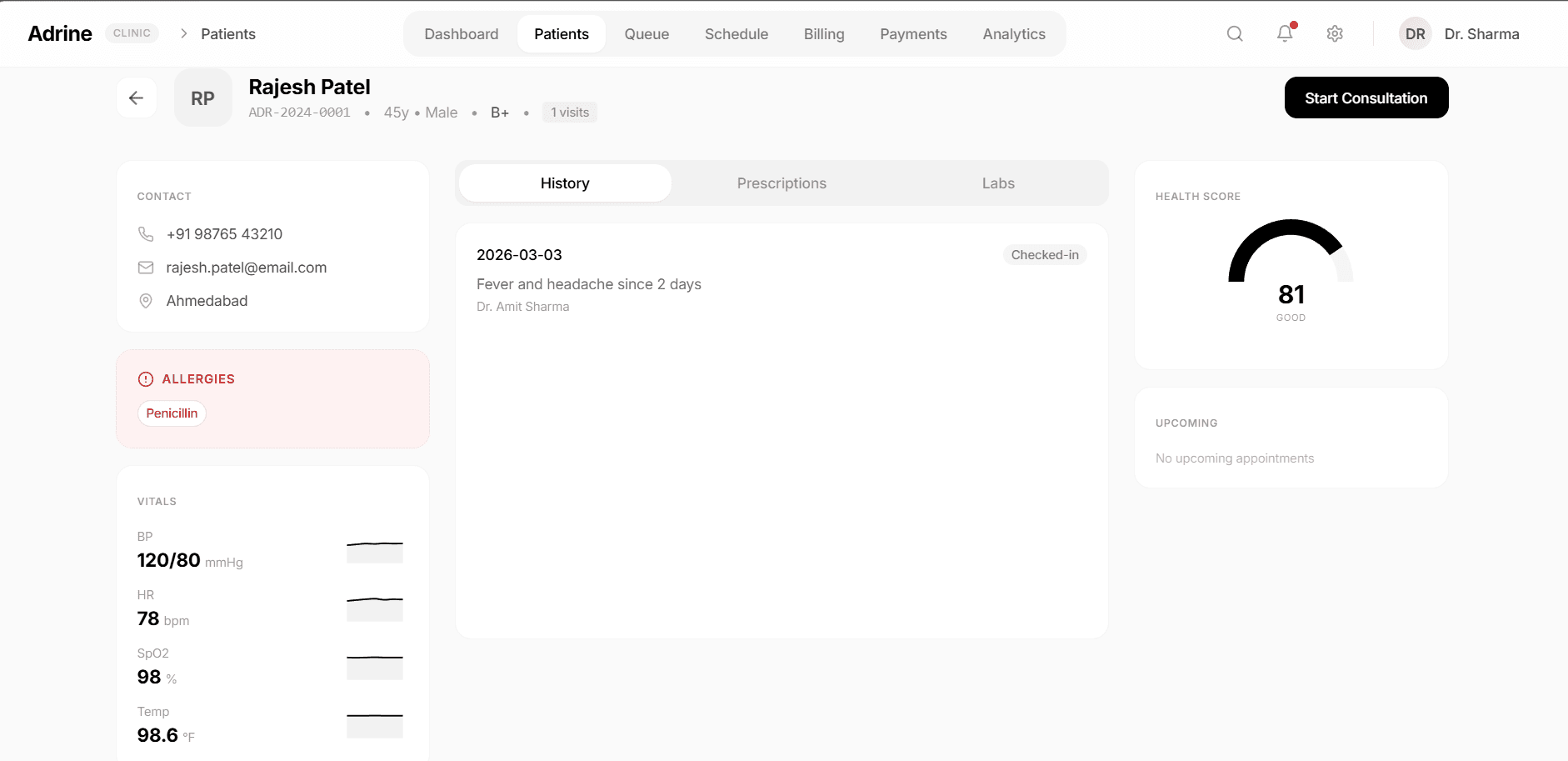
Drug interaction alerts: HMS with integrated drug databases flag dangerous combinations before the prescription is finalized. AI-powered systems detect allergies, contraindications, and dosage errors in real-time.
Impact: Studies show a 55% reduction in medication errors with electronic prescribing systems.
2. Faster Treatment Initiation
Instant medical history access: Doctors can view complete patient history, previous investigations, and ongoing medications within seconds. No more waiting for file retrieval.
Impact: Treatment initiation time reduces from 30+ minutes to under 5 minutes.
3. Better Chronic Disease Management
Automated follow-up reminders: HMS tracks patients with chronic conditions (diabetes, hypertension) and sends automated reminders for check-ups, medication refills, and lab tests.
Impact: 40% improvement in follow-up compliance for chronic disease patients.
4. Improved Care Coordination
Unified patient record: Specialists, nurses, lab technicians, and pharmacists all access the same record. No more fragmented information leading to conflicting treatments.
Impact: 35% reduction in duplicate tests and conflicting prescriptions.
5. Reduced Waiting Times
Smart queue management: Appointment scheduling, token systems, and automated notifications drastically cut waiting times. Patients know exactly when to arrive.
Impact: Average OPD wait time drops from 45 minutes to 12 minutes.
6. Enhanced Patient Safety
Barcode patient identification: Every patient gets a unique identifier. Medications, blood transfusions, and procedures are verified against this ID, preventing wrong-patient errors.
Impact: Near-elimination of wrong-patient incidents in digitized hospitals.
7. More Doctor-Patient Time
AI-powered documentation: With AI Scribe handling notes and prescriptions, doctors spend 40% more time actually talking to patients instead of typing.
Impact: Consultation quality improves as doctors focus on care, not clerical work.
Real Numbers from Indian Hospitals
Based on data from hospitals that implemented comprehensive HMS:
Conclusion
Hospital Management Software isn't just about efficiency—it's about patient safety, outcomes, and experience. In an era where Indian healthcare is rapidly modernizing, HMS is no longer optional—it's essential for delivering quality care.
The hospitals that invest in comprehensive, AI-powered HMS today will be the ones setting the standard for patient care tomorrow.
Transform Patient Care at Your Hospital
See how Adrine's AI-powered HMS improves patient outcomes while reducing clinician burden.
Get Free Demo