The average patient in an Indian hospital OPD waits 45 minutes for a 5-minute consultation. That's not healthcare — that's a queue problem. Top hospitals have cut wait times by 70% using digital queue management. Here's exactly how they do it.
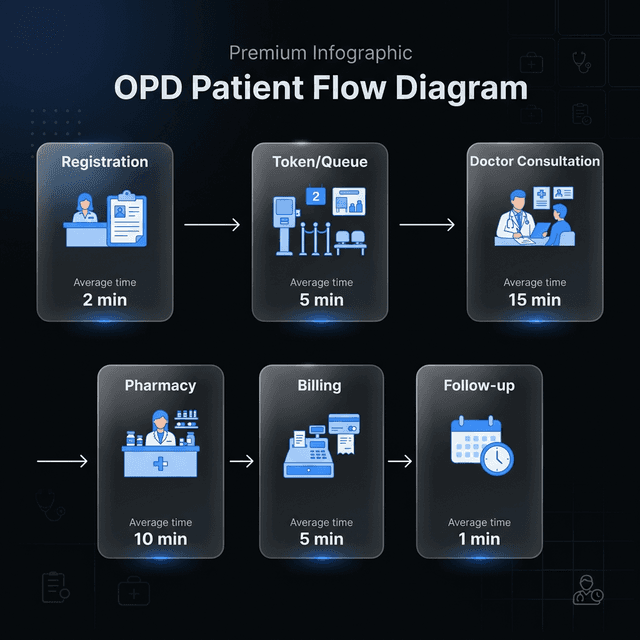
The OPD Queue Problem in India
India's OPD challenges are unique due to high patient volumes, cultural preferences for walk-ins, and limited doctor availability:
Token-based queue systems reduce perceived wait time by 50%.
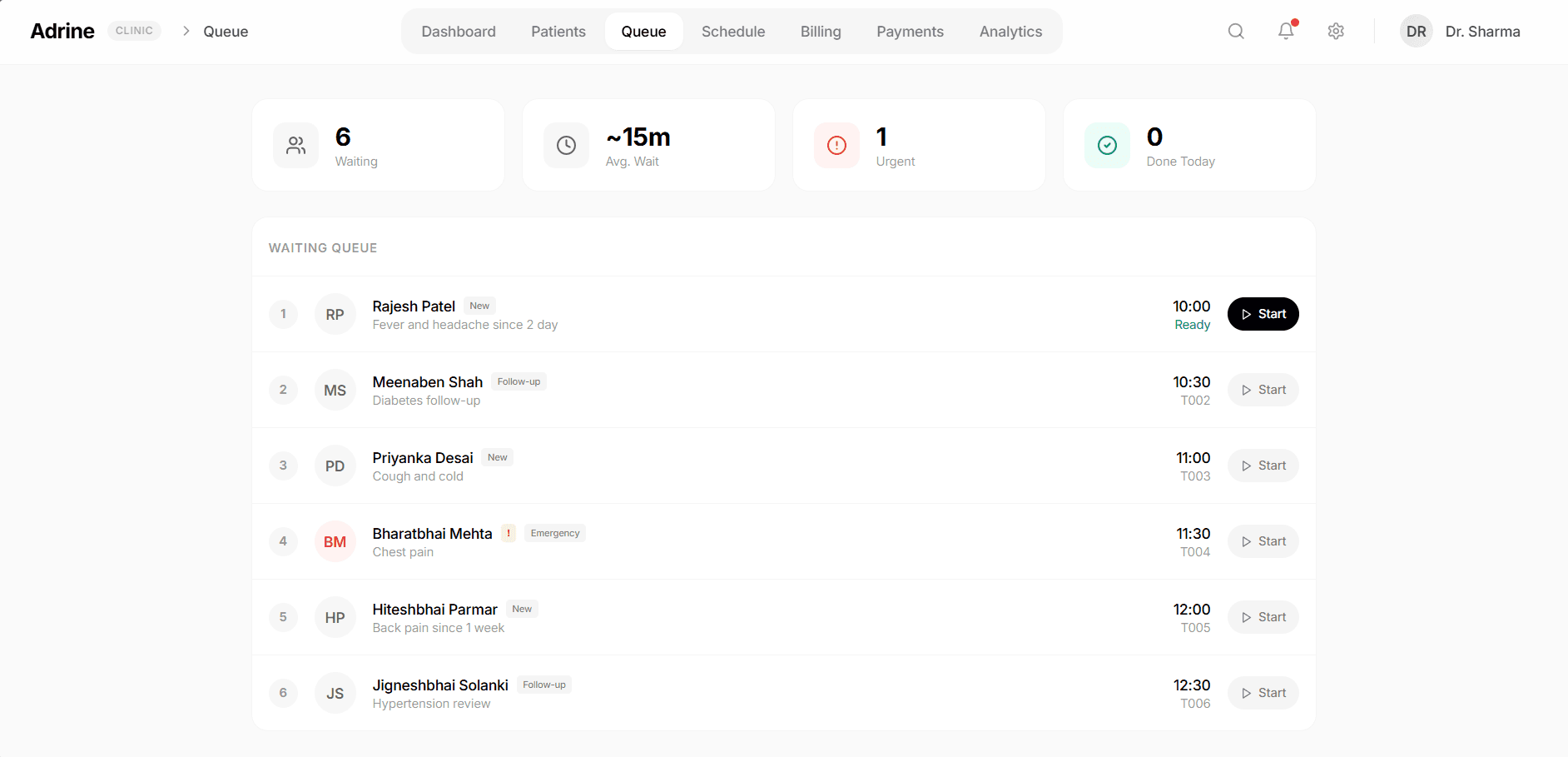
SMS queue updates improve patient satisfaction by 40%.
- High volume: Government hospitals see 500-2000+ OPD patients/day
- Walk-in culture: 60-70% of OPD patients don't have appointments
- Crowding: Physical queues cause chaos, arguments, and health risks
- No visibility: Patients don't know how long they'll wait
- Doctor delays: OT overruns, emergencies, and late arrivals break schedules
- Patient frustration: Long waits are the #1 reason for negative reviews
45 min
Average wait (without system)
12 min
Average wait (with system)
60%
Less crowding in lobby
30%
More patients served
What is an OPD Queue Management System?
An OPD queue management system is software that digitizes and automates the entire patient flow from arrival to consultation. It replaces manual token books, shouting of names, and physical lines with smart digital queues.
A modern queue system includes:
- Digital Token Generation: Automated token numbers assigned at registration or via SMS
- TV Display: Large screens showing current token, next in line, and estimated wait
- SMS/WhatsApp Alerts: Patients notified 15-20 minutes before their turn
- Virtual Queue: Patients can wait outside the hospital and join virtually
- Doctor Dashboard: One-click patient calling from consultation room
- Analytics: Average wait time, peak hours, doctor utilization
Types of Queue Systems
| Type | How It Works | Best For | Cost |
|---|---|---|---|
| Physical Token | Paper tokens from counter | Very small clinics | ₹0 (manual) |
| Standalone Kiosk | Self-service touch kiosk | Mid-size OPDs | ₹50K-1L (hardware) |
| SMS-Based | Token via SMS, virtual queue | All sizes | ₹500-2K/month |
| HMS-Integrated | Full system with registration, billing | Hospitals | Included in HMS |
| App-Based | Patient app with real-time tracking | Premium hospitals | Included in HMS |
Key Features of Modern Queue Systems
1. Smart Scheduling Engine
Automatically manages time slots based on consultation duration, doctor availability, and patient type. Walk-ins are slotted between appointments to minimize gaps.
2. Multi-Counter Distribution
When multiple registration counters exist, the system automatically distributes patients to the counter with the shortest queue.
3. Priority Handling
Configurable priority rules for senior citizens, pregnant women, differently-abled patients, and emergencies without disrupting the main queue.
4. TV Display Integration
Large screen displays in the waiting area showing current token number, doctor room assignment, and estimated wait time. Audio announcements in multiple languages.
5. Virtual Queue (Game Changer)
Patients get their token via SMS and can wait anywhere — at the canteen, parking, or even home. They receive a notification 15 minutes before their turn. This reduces physical crowding by 60%.
6. Doctor Dashboard
Doctors see their patient queue, call the next patient with one click, skip/reschedule patients, and mark consultations complete. Real-time sync with the display system.
7. Analytics & Reporting
- Average wait time by doctor/department
- Peak hours analysis
- Patient no-show rates
- Doctor consultation duration trends
- Queue abandonment tracking
How to Implement: Step-by-Step
Step 1: Audit Current Flow
Map your current OPD patient journey. Identify bottlenecks — is it registration, waiting, or consultation?
Step 2: Choose Your System Type
For most hospitals, an HMS-integrated queue system is ideal as it connects registration, billing, and queue management in one flow.
Step 3: Set Up Token Rules
Configure doctor-wise slot counts, consultation duration, priority rules, and break timings.
Step 4: Install Displays
Mount TV displays in waiting areas. Most systems work with any Android TV or standard screen with an HDMI dongle.
Step 5: Train Staff
Focus on registration counter staff (token generation) and doctors (patient calling interface).
Step 6: Go Live & Optimize
Start with 1-2 departments, measure results, and expand. Use analytics to continuously optimize slot allocation.
Frequently Asked Questions
How much does a hospital token system cost?
A standalone hardware system costs ₹50K-1L. An HMS-integrated solution like Adrine includes queue management in the subscription (from ₹5,000/month) with no additional hardware — tokens are sent via SMS.
Can patients book tokens online?
Yes. Modern systems allow patients to book their OPD token via the hospital website, patient app, or WhatsApp. They receive a time slot and can track their position in real-time.
Does it work for walk-in patients?
Absolutely. Walk-in patients are automatically assigned the next available slot. The system intelligently interleaves walk-ins between pre-booked appointments.
Related Articles
- 15 Standard Modules in Hospital Management System (2026)
- Hospital Billing Software with GST 2026: Complete Guide
- NABH 6th Edition Standards 2026: Key Changes
- Top 10 Hospital Management Software India 2026
Transform Your OPD Queue Today
Adrine's smart queue system reduces wait times by 70% from day one. Token display, SMS alerts, and virtual queue included.
Book Free Demo